
From knowing to doing
Building systems to sustain PBIS


The research on what works to improve behaviour and learning is well established, but knowing what works isn’t the same as actually making it work in a busy school. This is where implementation science comes in. It helps bridge the gap between research and real classrooms. PBIS isn’t just about having the right approach, it’s about putting it into practice in a way that sticks. Schools need more than an understanding of PBIS features; they need a clear plan for how to roll them out, how to support staff through change, and how to check whether the work is having the impact everyone hopes for.
One of the strengths of PBIS is its focus on data and systems, not just strategies. Evidence-based practices won’t work without systems to support them. PBIS recognises that sustainable change happens when schools build strong structures to guide actions and support all adults in the school to implement PBIS consistently.
Tier 1 PBIS implementation stages
Schools typically move through four stages, each with its own focus and challenges.
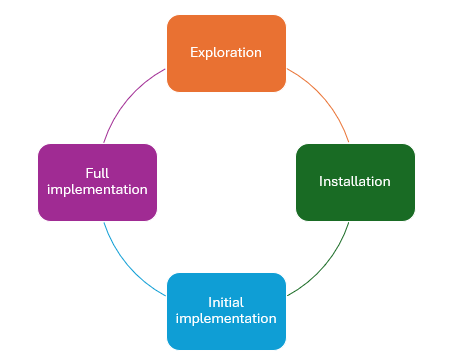
1. Exploration: Are we ready?
In the exploration stage, schools are asking some big questions:
Is PBIS a good fit for our context?
Do we have stable leadership and the capacity to support change?
Are staff beliefs about behaviour broadly aligned with PBIS principles?
Can we bring together a representative leadership team?
This is a time for learning and reflection. Schools often seek information from outside sources, for example by visiting other schools, talking with behaviour specialists, or learning more about what PBIS implementation actually involves. The goal isn’t to rush in, but to decide whether the conditions are right to begin.
2. Installation: Laying the foundations
Once a school commits to PBIS, the real groundwork begins. During installation, a PBIS leadership team is formed and initial training takes place. Over several months, the school starts building the systems that will support a consistent, proactive approach to behaviour.
Key work in this phase includes:
Establishing or reviewing school-wide expectations
Consulting with staff, students, and families to ensure shared values
Agreeing on common language for expectations and behaviour support
Reviewing or developing processes to ensure consistency across the school
Forward planning and preparation for implementation
This stage is about setting things up properly so implementation doesn’t rely on individual effort alone.
3. Initial Implementation: Making it happen
In initial implementation, PBIS starts to look visible in daily practice. Schools have most of the essential elements in place, but consistency and confidence are still developing. The leadership team meets regularly and works from an action plan. Expectations are explicitly taught to students, acknowledgement systems are introduced, and agreed responses to behaviour are put into practice.
This phase also involves:
Building communication loops so staff, students, and families can contribute
Collecting and reviewing behaviour data to guide decisions
Checking whether data systems are accurate and useful
4. Full Implementation: In it for the long haul
Full implementation means Tier 1 PBIS is firmly embedded. All core features are in place and working together. The PBIS leadership team is well established, with clear meeting routines and decision-making processes. Action plans guide next steps, professional learning is ongoing and responsive, and coaching supports staff at different stages of development.
Importantly:
Student, staff and family voice is prioritised and regularly sought
Data shows improving outcomes, including for students who are most vulnerable
Systems and practices are reviewed to ensure fidelity and long-term sustainability
At this point, PBIS becomes simply how the school operates.
Why does attention to implementation matter?
PBIS works best when schools focus not just on what to do, but on how to make it happen. Implementation science reminds us that real, lasting improvement happens when schools build data-informed systems that make using evidence-based practices the default way to support student learning, wellbeing and behaviour.
Resources
Australian Education Research Organisation (AERO) Taking an evidence-informed approach to implementation
Center for Implementation Implementation Science Explained
Center on PBIS Implementation Blueprint